
Georgetown County Arrest Warrants Explained
An arrest warrant is judicial process: it authorizes an officer to take someone into custody on a criminal charge. In Georgetown County, a magistrate criminal case begins on sworn information. State law limits who may seek an arrest warrant at the magistrate level. When a private complainant asks for process, the court uses a courtesy summons under the statute instead. Georgetown County also splits its criminal docket by seriousness. General Sessions handles major circuit matters, while magistrates take summary cases. The case paper, the court named on it, and the charge all point you down the right route. One caution: a bench warrant issued after a missed court date is not the same thing as a fresh arrest warrant built on a charge. Knowing which one you face changes who you call and what you ask for.
Georgetown County Sworn Information Starts a Case
For a magistrate criminal case, sworn information is the foundation. South Carolina Code section 22-3-710 describes it as the basis for commencing the proceeding and issuing an arrest warrant. Section 22-5-110 covers arrest process and courtesy summonses. The court reviews the legal basis before anything issues; a private person cannot create a warrant simply by asking the Sheriff. Remember that these statutes describe the process, not the contents of any particular Georgetown County file. The Public Index may show a case and its event history when the material is public. If an entry is unclear or a record is sealed, ask the issuing court to explain it. Read S.C. Code §22-3-710 and S.C. Code §22-5-110 for the magistrate process.
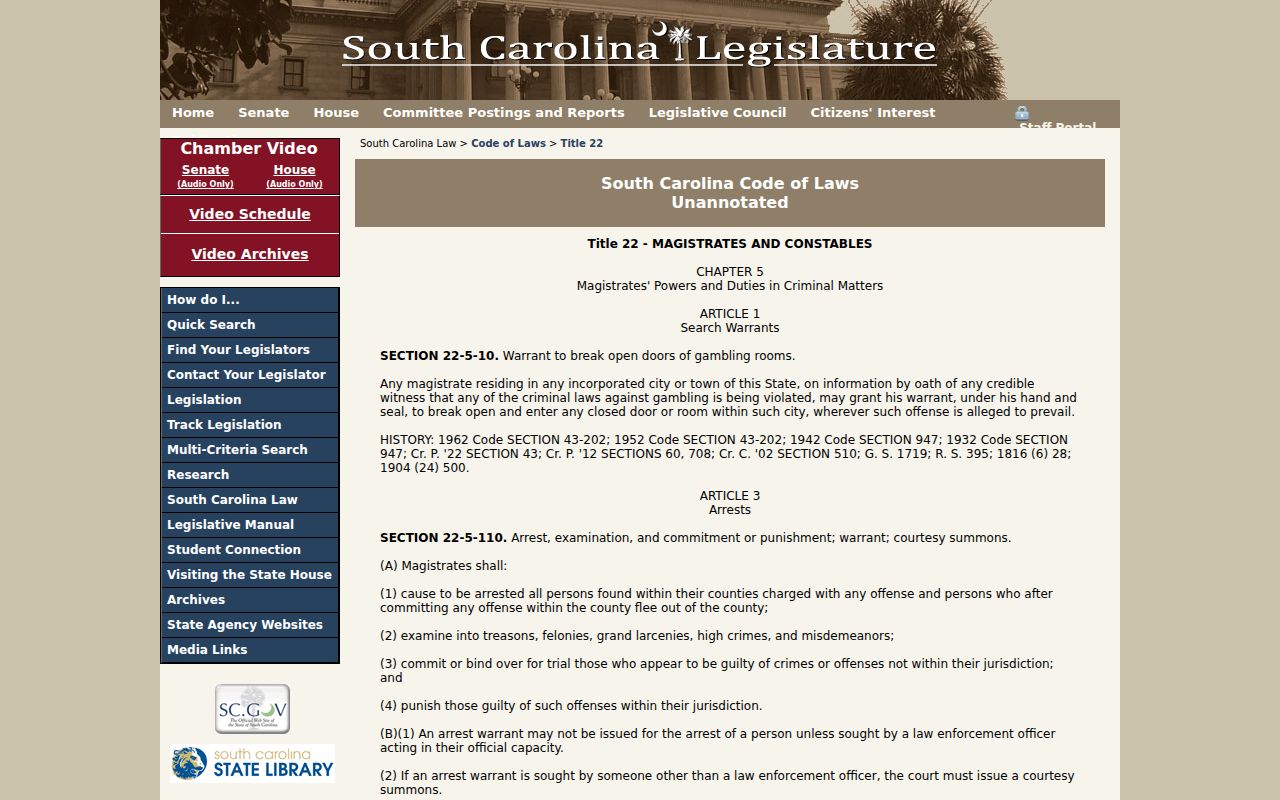
The official code distinguishes a law-enforcement warrant request from a courtesy summons route.
Inside a Georgetown County Arrest Warrant
The Georgetown County Sheriff publishes no sample arrest warrant copy, so no local template or warrant-number pattern can be described here. A case record may still tell you plenty. Look for the issuing court, case number, charge, issuing judicial officer, and event history. A booking record adds the charge, arresting agency, and bond once service and court paperwork are done.
| Warrant number | Local format not published in the official sources reviewed. |
|---|---|
| Case number | Use the number on court papers to locate the public case where available. |
| Charge | May appear after service in the booking interface. |
| Issuing officer | Ask the issuing court which judge or magistrate authorized the process. |
| Bond and status | Bond may lag; confirm open, served, or recalled status with the court. |
Treat these as fields to ask about. No Georgetown County record promises that every field appears online.
Georgetown County Warrants Unit Serves Arrest Warrants
The Sheriff's official Patrol page describes a Warrants Unit that manages and serves arrest warrants issued and served in Georgetown County. Its public contact number is (843) 546-5102. The page offers no complete online name search, no public roster, and no same-day surrender schedule, so the phone call matters. Ask which court issued the warrant, whether the unit can confirm its current status, and what location or attorney contact is appropriate. A circuit case also involves the Clerk of Court and General Sessions. A lower-court matter belongs to the magistrate or city court that issued it.
Georgetown County Sheriff’s Office
430 N. Fraser Street
Georgetown, SC 29440
(843) 546-5102
The county’s Sheriff page lists the main office and public contact information.
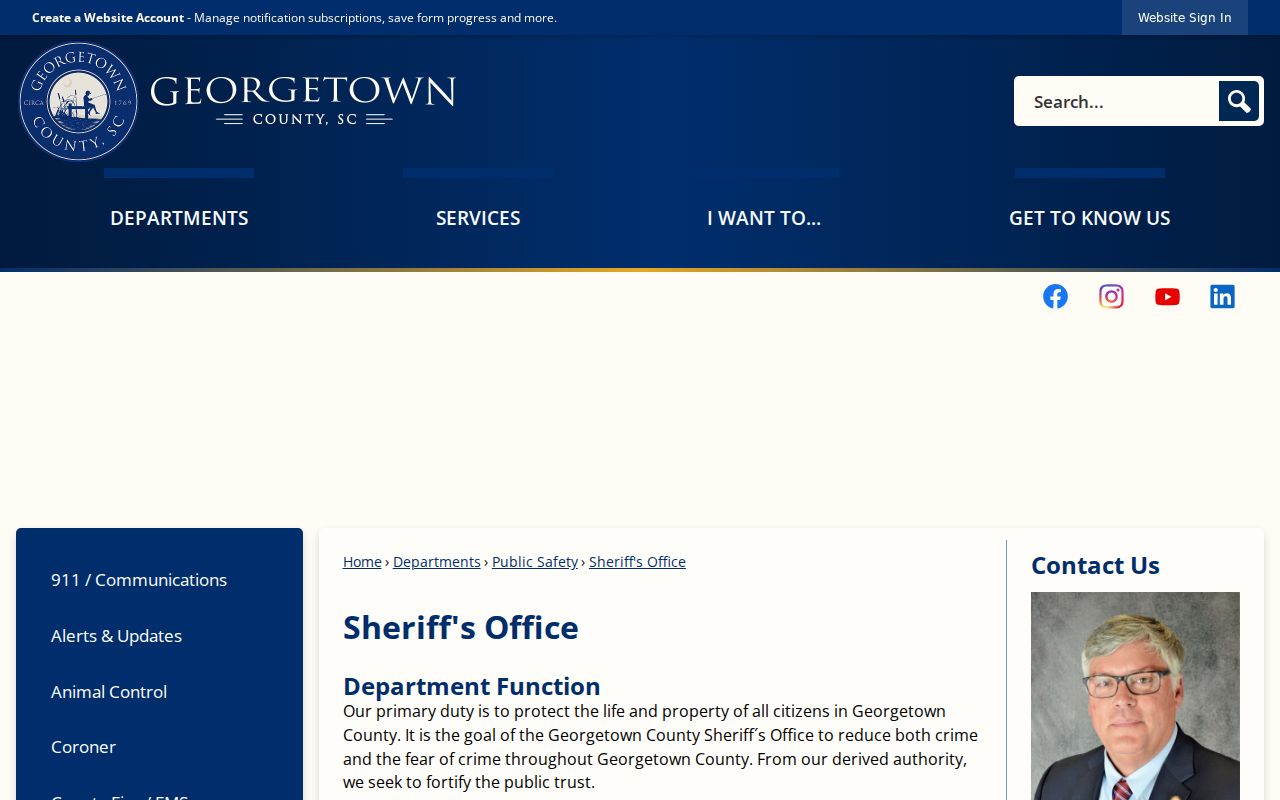
Do not confuse the two Georgetown County addresses. The Sheriff's Office sits on Fraser Street. The detention center sits on Browns Ferry Road.
Serving Arrest Warrants in Georgetown County
The Sheriff's Warrants Unit manages and serves county arrest warrants, but it is not the only agency that executes process. Municipal police and magistrates' constables may serve city or summary-court papers, and South Carolina law provides routes for authorized officers to execute or endorse process. Keep one distinction straight: the agency that serves a warrant may differ from the court that controls it. If the person is held at the county detention center, Bond Court sets bond. The Sheriff FAQ says charges post after service and bond information after court paperwork reaches the Booking Officer. Detention staff can discuss current custody. They do not set the bond.
Warrant flow: sworn information or court action › issuing judge or magistrate › authorized officer serves process › booking and Bond Court if held.
Georgetown County Booking May Lag Service
A Georgetown County arrest warrant may sit unserved for a while, and Booking and Release will not show it before service. The Sheriff's FAQ explains why: charge information follows service, and bond details follow Bond Court paperwork. So a blank booking search cannot rule out an unserved warrant. After an arrest, the interface may show booking and release dates, the arresting agency, the charge, and the bond. Those fields help a family member track custody in Georgetown County. They will not reveal every open warrant or confirm the case has ended. Note: Ask the issuing court about the warrant and the detention center about custody or posted bond; those are separate questions.
Comparing Arrest, Summons, and Bench Warrants
Georgetown County uses these terms for different steps in court process. An arrest warrant authorizes custody on a charge. A courtesy summons directs a person to appear. A bench warrant follows a missed date or a failure to comply once a case is underway.
| Process | Why It Starts | First Office to Ask |
|---|---|---|
| Arrest warrant | Criminal charging basis and judicial authorization | Issuing court and Sheriff’s Warrants Unit |
| Courtesy summons | Process used in a private-complaint route under state law | Court listed on the summons |
| Bench warrant | Missed setting, contempt, or court-order issue | Court that set the case |
Unsure which term fits your Georgetown County case? Give the court the case number and ask it to identify the process. Do not infer status from a booking entry.
Georgetown County Arrest Warrant Records
The Georgetown County Trial Court Public Index can help you find a public case record. It is not an active-warrant list, though, and recent court entries may lag. A public page may also omit sealed material, juvenile information, or law-enforcement records that qualify for withholding. Search by your own name or case number, check the court and event history, and call the clerk if an entry is unclear. A blank result is not proof that no arrest warrant exists. For direct confirmation, the Sheriff's Warrants Unit and the issuing court remain the points of contact. Open Georgetown's Trial Court Public Index for available public case information.
If There's an Arrest Warrant for You
A warrant in your name needs verifying, not guessing. Call the Warrants Unit or the issuing court in Georgetown County and confirm the process is real. Then talk to a criminal-defense lawyer before you act. Georgetown County offers no warrant-only walk-in window and runs no safe-surrender event, so ask the court directly who controls the warrant. Find out whether your attorney can arrange an appearance, where surrender would happen, and whether bond is set. Ignore unsolicited calls, search results, and empty online screens. Once the court confirms things, follow its instructions and keep every case date. Bond covers release conditions only; it never dismisses the charge.
Confirm the court and location before you appear. County sources do not promise same-day release or a universal bond amount.
Facing a possible warrant in Georgetown County? The Georgetown County warrant overview walks through confirming it, getting counsel, handling bond, and fixing your record.
Georgetown County Arrest Warrant Confirmation Steps
Gather the details first: full legal name, date of birth, any case or citation number, the issuing agency, and a rough court date. Then call the Sheriff's Warrants Unit with county arrest-process questions. The court named on your paperwork controls the order, the bond, and any recall procedure, so work from that listing. If an arrest has already happened, turn to Booking and Release or the detention center for custody details. Bond figures can lag behind Bond Court paperwork, so allow some time there. For copies, the Sheriff Public Information Unit can help, as can the clerk of whichever office holds the file in Georgetown County.
- Verify through an official number you find independently.
- Ask which court and agency hold the record.
- Ask what the next court or bond step is and request proof of any recall.
Note: The law can limit a public-record copy request in Georgetown County, and only the issuing court can decide whether a warrant stands.
Georgetown County Arrest Warrant Access
South Carolina FOIA opens most public records but leaves room for law-enforcement exemptions. Juvenile files, sealed court material, and protected identifying details may stay closed. A case index shows only what the system is set to display. Ask the clerk or the Sheriff Public Information Unit for a targeted record and the current fee schedule. When something is withheld or redacted, find out which Georgetown County office controls it and what rule applies. The court alone confirms whether a warrant stays in force.
Public access: S.C. Code Title 30, Chapter 4 governs FOIA. S.C. Code Title 63, Chapter 19 protects juvenile records.