
Searching for a Warrant in Georgetown County
Georgetown County has no single public name search that lists every active warrant. That surprises people. The Sheriff's Warrants Unit at (843) 546-5102 handles county arrest warrant questions, the Trial Court Public Index shows public cases, and the court that issued a ticket or summons answers for bench or traffic warrants. Each tool does one job. Give whichever office you contact your full name plus a date of birth, case number, citation number, court, or hearing date if you have them. A family member can help route the question, but the court decides what record it may release. Start with the case paperwork, since the issuing court may not be the Sheriff, and the paper tells you which office to call.
- Identify the court from the notice or citation.
- Call the Georgetown County Warrants Unit about a county arrest warrant.
- Use the statewide Court Roster gateway to open Georgetown’s Public Index.
- Ask the named magistrate or municipal court about a missed date or local ticket.
- Request a non-exempt record from the Sheriff’s Public Information Unit or court if online records do not answer the question.
For the broader office map and resolution steps, see the Georgetown County warrant-records overview.
The Georgetown Warrants Unit Phone Route
On its official Patrol page, the Sheriff's Office describes the Warrants Unit as managing and serving arrest warrants issued and served in Georgetown County. The page publishes (843) 546-5102 as the public contact number. It offers no name-search form, though, and does not promise phone confirmation of every bench or municipal warrant. Before you call, gather your full name, date of birth, any possible case number, the issuing agency, and a likely court date. Ask which court issued the process and whether the record is active, served, or recalled. If the trouble started with a missed lower-court date, call that court as well. The Sheriff's Warrants Unit page lists its role and public contact number.
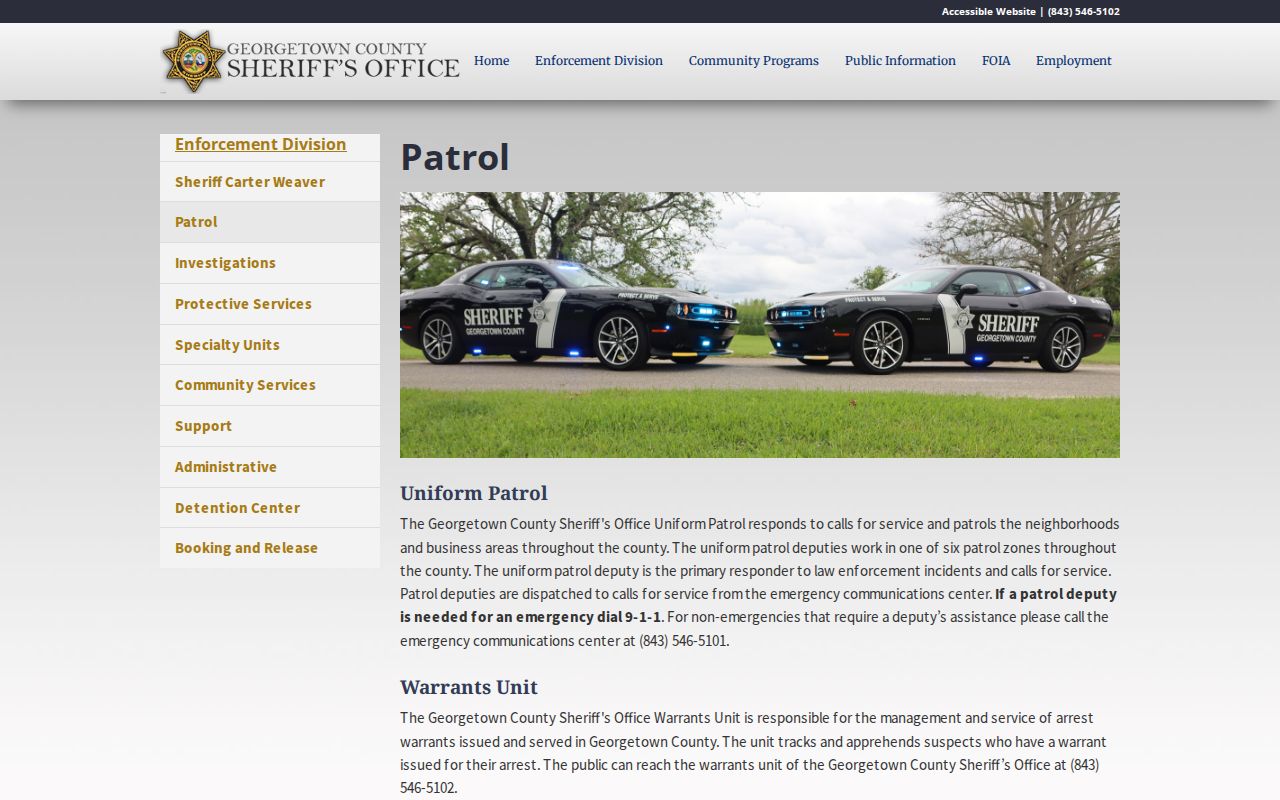
The Sheriff page is a contact route, not an online roster of Georgetown County warrants. Ask which office can answer the type of warrant you need confirmed.
Warrant Search Fields Explained
The public search tools in Georgetown County each serve a different job. The statewide gateway routes a visitor by county, city, or ZIP code. A booking interface runs on name plus booking or release dates. A traffic payment lookup wants the county or municipality, last name, and case number.
| Field or Control | Where It Appears | How to Use It |
|---|---|---|
| County, city, or ZIP | Trial Court gateway | Select Georgetown to reach county case records. |
| Last Name, First Name | Booking and Release | Search custody and release entries, not all open warrants. |
| Arrest Date, Release Date | Booking and Release | Narrow a booking or release listing. |
| County or municipality | SC.gov traffic route | Choose where the citation was issued. |
| Case number | Traffic/payment route | Enter letters and numbers together, without spaces. |
Note: the live application may render Georgetown County Public Index field labels, so do not assume the gateway fields are the full case-search form.
Georgetown Public Index Shows Cases
The South Carolina Judicial Branch gateway asks for county, city, or ZIP, then opens the local public index. Georgetown's Trial Court Public Index is the place for public case details. It lists courts, parties, and events. It is not a statewide active-warrant database, and it may not show a warrant-status field at all. Recent entries can lag. Sealed or confidential cases stay out of public view, and some lower-court data may be incomplete. Search a name or case number, then read the court and event history for what happened. If an entry hints at a missed date or bench warrant, call that court about status and the recall procedure. The Georgetown court-roster interface can help locate scheduled case information.
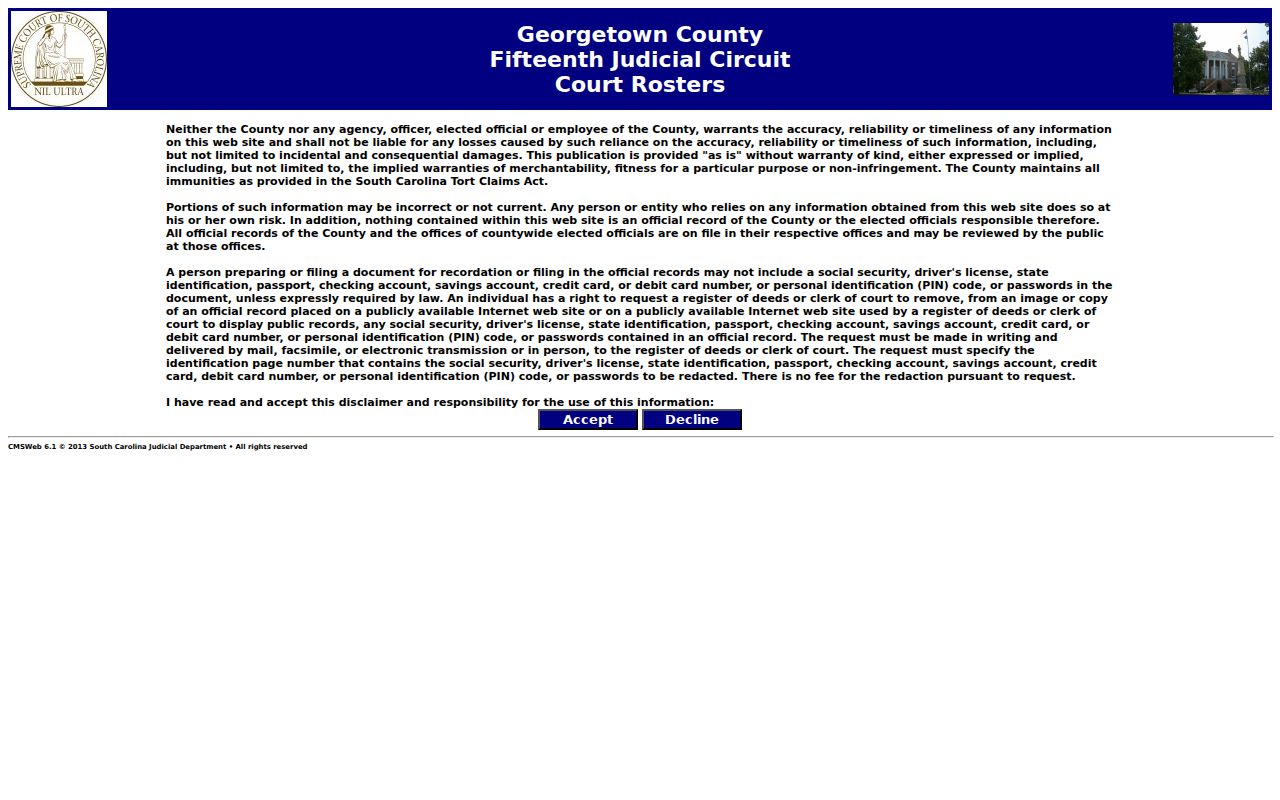
Roster details give court context in Georgetown County; they do not show every active warrant.
What a Warrant Search Shows
A Georgetown County case search may show a court, case number, charge description, party, and visible event history. A booking result can add the arresting agency, booking and release dates, charge, and bond when posted. Neither interface hands you the warrant itself.
| Warrant number | Georgetown’s public sources do not confirm a standard format. |
|---|---|
| Case number | May connect the case to the issuing court and its event record. |
| Charge | May appear in booking after the warrant is served. |
| Bond | Can lag until Bond Court paperwork reaches the Booking Officer. |
| Status | Ask the issuing court to explain whether a warrant remains open or was recalled. |
A blank Georgetown County search result does not prove no warrant exists. The record may sit in another court, be newly entered, sealed, or not yet served.
Georgetown County Booking and Warrant Checks
The Sheriff's Booking and Release page is a custody listing. Its FAQ says charges appear after the arresting agency serves the warrant, and bond details after Bond Court paperwork reaches the Booking Officer. Someone with unserved county process or a city-court bench warrant may not appear there. The limit cuts both ways, since a booking entry can stem from a new arrest or another agency's process rather than the warrant on your mind. Use the booking page for custody questions. Use the issuing court or Warrants Unit to confirm warrant status in Georgetown County. SLED CATCH is a criminal-history report, not a warrant lookup.
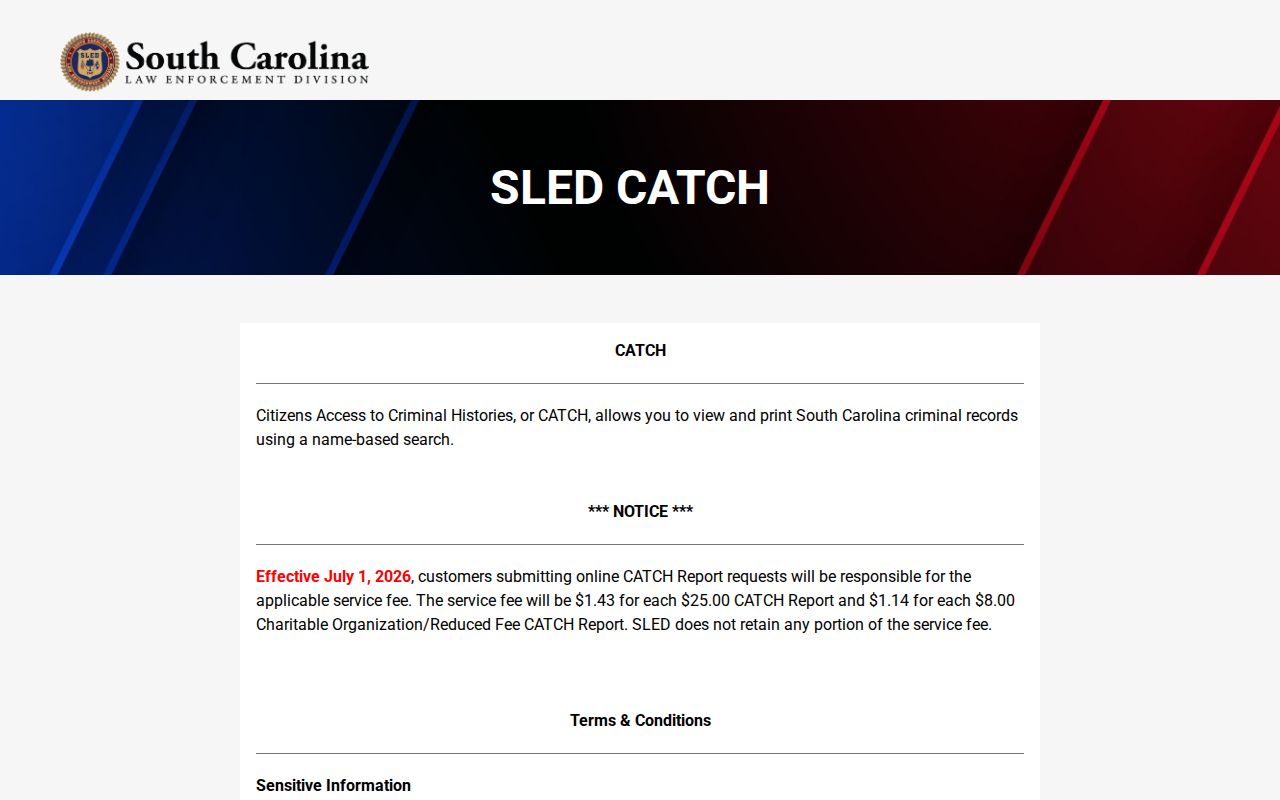
The SLED page expressly excludes Wanted Persons, so a CATCH report cannot answer a Georgetown County active-warrant question.
Where to Check Warrants in Georgetown County
Match the office to the kind of case. General Sessions and Family Court records route through the Clerk of Court. Traffic and summary matters belong to the magistrate court that heard them. City ordinance or city-ticket matters belong to the Andrews, Georgetown, or Pawleys Island Municipal Court. The Sheriff's Warrants Unit is the county arrest-warrant channel, while municipal police and magistrates' constables may serve other process. South Carolina Information Exchange is for authorized users, and SLED CATCH is not a public wanted-person search for Georgetown County.
Sheriff Public Information Unit
430 N. Fraser Street, Georgetown
(843) 546-5102
For a county-by-county layer, the South Carolina Court Roster gateway routes Georgetown County users to available public indexes.
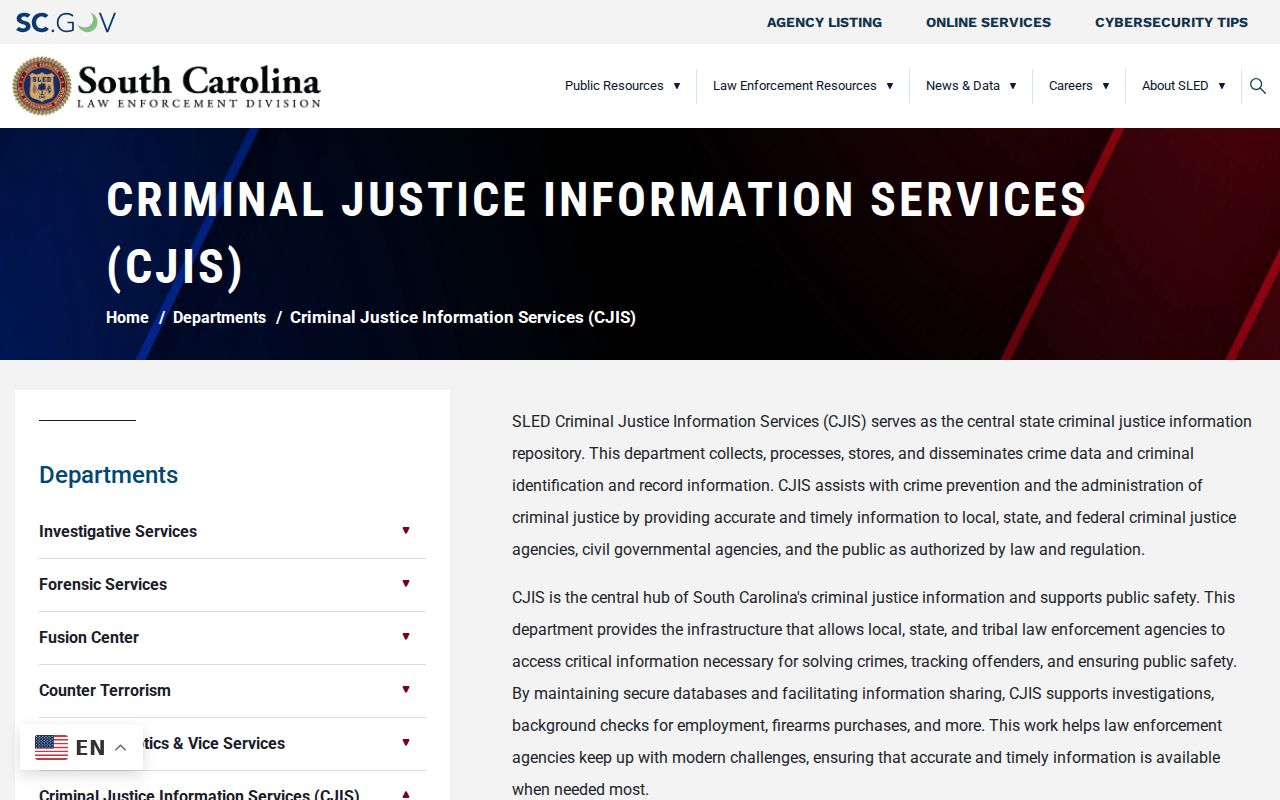
SCIEx is centralized data for authorized users, not a public name-search product.
Georgetown County Warrants and SLED CATCH
South Carolina keeps several law-enforcement data systems, but it posts no single public statewide warrant search by name. SLED CATCH sells a paid criminal-history report, yet its own notice says Wanted Persons are excluded. SCIEx serves authorized users only. It is not a public portal. A state database and a public warrant list are two different things, so a paid history report is the wrong tool for a Georgetown County warrant. Check the Public Index for court cases. For a warrant, call the Sheriff or the issuing court. SLED’s CJIS information explains the authorized-user repository role. Note: A blank result from CATCH, the Public Index, or booking does not confirm that no warrant was ever issued.
Restricted Georgetown County Warrant Records
South Carolina FOIA opens most public records, but it lets law enforcement withhold or redact some files. Juvenile records get extra protection. Both juvenile court files and identifying juvenile law-enforcement information are shielded. Courts can seal records too. Other statutes allow restrictions as well. Send a focused request to the office that holds the Georgetown County record you want, and ask for a written explanation if anything is withheld. The Sheriff’s Public Information Unit routes county requests; each Clerk or municipal court handles its own case file, and fees and response times depend on the request and statute.
Access law: South Carolina FOIA, S.C. Code Title 30, Chapter 4, covers public-record access and exemptions. Title 63, Chapter 19, protects juvenile records.
The Georgetown County Clerk of Court page lists the clerk’s contacts for public records, General Sessions, and Family Court.
The Clerk’s page covers circuit and family files in Georgetown County; municipal and magistrate matters stay with their own courts.
Georgetown County Lower-Court Warrant Calls
A name missing from the county booking page or circuit index may simply mean another court holds the record. Georgetown County runs several magistrate systems and three municipal courts. That is a lot of clerks. Your ticket, summons, or case paper is the best clue to which one can confirm a missed-date warrant. For a city citation, call that municipal court first. For county traffic, use the named magistrate office. If an online case appears but the status is unclear, ask the clerk whether the judge ordered process and whether it is still active. Ask what step gets a reset or recall.
- Issuing court
- The court that controls the warrant and its next step.
- Served
- Law enforcement has executed the process; booking may follow.
- Recalled
- The issuing court withdrew the process. Ask when the record updates.
Note: Georgetown County’s online case tools can locate a file, but only court staff can explain the official warrant status.