
Georgetown County Active Warrants Explained
An active warrant is simply process that is still open in whatever system controls it. Georgetown County does not publish a complete public name-search roster through the Sheriff or the county. The Sheriff's Warrants Unit does manage and serve county arrest warrants, and it takes phone calls. A bench warrant can sit with a magistrate, a municipal court, General Sessions, or Family Court. Only the issuing court controls recall and the next case step. A public case result or a booking entry may add context. Neither one is a complete countywide active-warrant check, so status questions still go to the court. Note: "active" and "outstanding" show up in case discussions, but Georgetown's public sources publish no complete status-code guide.
Georgetown County Has No Active Roster
The official Sheriff site offers a Warrants Unit contact, a Booking and Release interface, and dated public-information posts. What it does not offer is a public roster of people with active county warrants. News of an arrest or a warrant being served is one event, not a live list. A roundup page, a commercial search result, or an old news item cannot prove a warrant is open or closed. For a county arrest warrant, ask the Sheriff's Warrants Unit. For a bench, traffic, or municipal warrant, ask the issuing court. That split is the only reliable route in Georgetown County.
Public-list status: Georgetown County publishes no active-warrant roster and no official county Most Wanted roster.
How Georgetown County Tracks Active Warrants
Georgetown County warrant records sit at different court levels. General Sessions and Family Court records route through the Clerk of Court, while magistrate and municipal cases stay with the court that heard them. The Sheriff's Warrants Unit manages and serves county arrest warrants. City police or magistrates' constables may serve other process. The public sources give no online update schedule for warrant status. After a payment, an appearance, a bond, or a recall, ask the issuing court when its record and any Sheriff record will change. The Sheriff's page is a phone contact, not a status feed. The Sheriff's Public Information page shows the county's request route.
The unit can route a public-record question for Georgetown County, but it posts no full active-warrant roster.
Booking and Release Is a Custody Tool
Georgetown County Booking and Release is the right tool for checking whether someone has been booked or released. The Sheriff FAQ says charges are added only after a warrant is served, and bond details after Bond Court paperwork reaches the Booking Officer. That timing means an unserved warrant can be missing from the interface. The reverse is also true. A booking record does not prove the person has the particular warrant you are trying to verify; it may stem from a new arrest or another agency's case. For real status, call the Warrants Unit or the issuing court. The official booking page shows its name and date search controls.
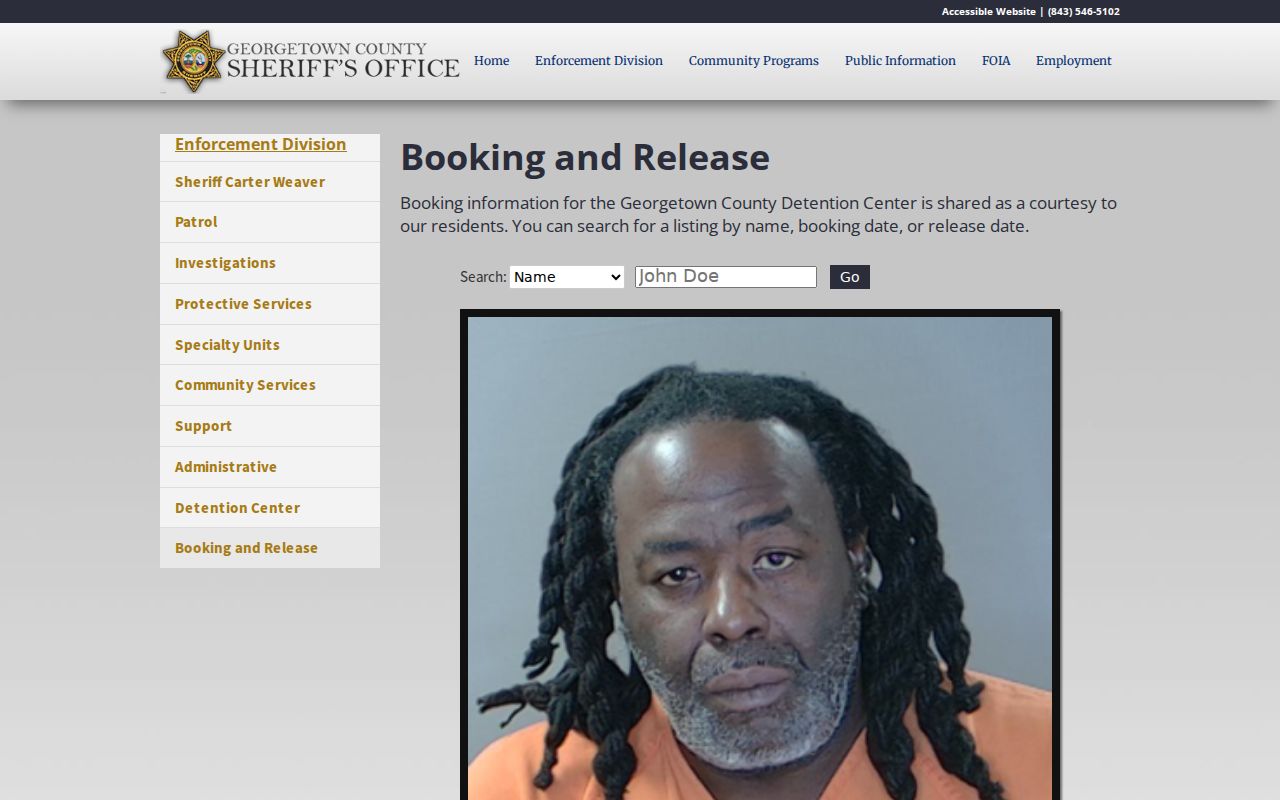
The fields on the Georgetown County page support a custody search only, not an unserved-warrant database.
Inside an Active Warrant Record
A case file may show a court, case number, charge, and event history. Booking can add the arresting agency, booking and release dates, charge, and bond once paperwork arrives. Georgetown County publishes no local warrant-number format or public code key.
| Warrant number | Ask the issuing court; a county format was not located. |
|---|---|
| Case number | Connects the public case record to its court and event history. |
| Charge | May appear in booking after service. |
| Bond | May appear after Bond Court paperwork reaches booking staff. |
| Status | Confirm directly with the court; no local public status-code table was found. |
These are possible record fields, and no Georgetown County interface promises to show them all.
Georgetown County Booking and Warrant Fields
The Sheriff's Booking and Release form uses fields that help find custody entries. It is a separate tool from warrant confirmation. The official FAQ describes last name, arrest date, and release date searches, and the interface also shows first name where displayed.
| Field | Use | Limit |
|---|---|---|
| Last Name | Find a booking or release entry | Does not search unserved warrants |
| First Name | Narrow a result where displayed | Interface behavior can change |
| Arrest Date | Filter an arrest listing | Not the warrant issue date |
| Release Date | Find release information | Not proof a court case is closed |
The Sheriff FAQ also separates charges posted after service from bond details entered after court paperwork. That local timing matters more than any guess about an empty search. Read the Sheriff's FAQ for booking and bond timing.
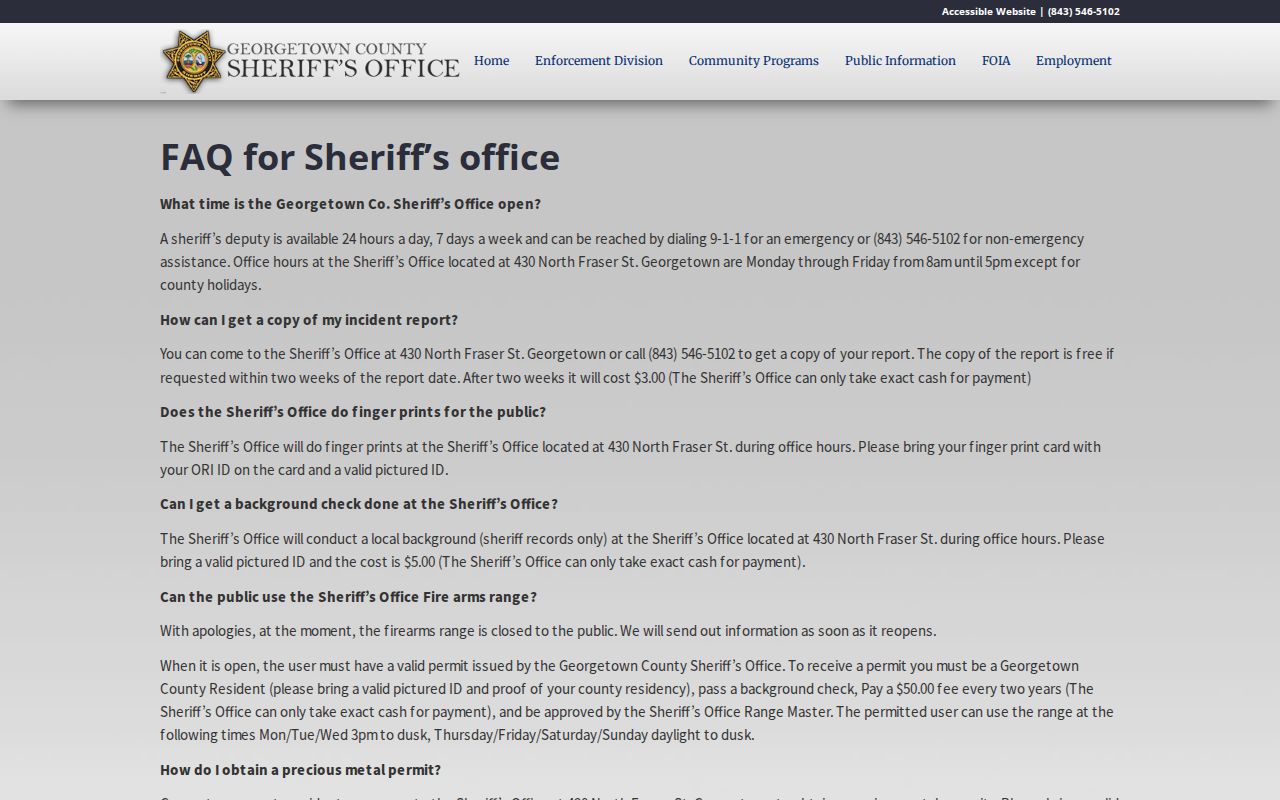
The FAQ explains why a booking screen is not a complete warrant-status source.
Georgetown County Warrant Roundups and Most-Wanted Lists
Georgetown County runs no active-warrant roundup, amnesty week, reward program, or public Most Wanted roster. Sheriff news releases describe dated activity, but they are not a curated or complete list. A release can be old by the time you read it. A most-wanted program picks a small group for public attention. An active-warrant system would try to cover open process across all courts. Since Georgetown County has no roster, watch the Sheriff's official pages for notices and take personal status questions to the proper court. The separate Georgetown County Most Wanted List page explains the local source gap and safe reporting routes without republishing a roster.
Georgetown County Court Updates Can Lag a Warrant
The South Carolina Trial Court Public Index is a fair first stop for public case records. The Judicial Branch cautions that new entries can lag behind reality. A missed hearing might show up as a bare clerk event, with no label telling you what happened. Sealed and juvenile files may never show at all. Terms like “served,” “recalled,” and “cleared” are everyday words, not Georgetown County’s published code set. So call the issuing court. Ask what an event means and whether the Sheriff has received the update. A web result is not a final status check.
- Served
- An officer executed the warrant.
- Recalled
- The issuing court withdrew the process.
- Cleared
- The record was updated after a court or enforcement step; the case may continue.
Note: Save the case number and the office that confirmed the update, then ask when Georgetown County systems should reflect it.
When Your Name Is on the Warrant List
Georgetown County publishes no complete public warrant list. So an online name match is only a lead to verify, not a court decision. Contact the issuing court or the Warrants Unit yourself. Ask which court controls the process, whether bond has been set, and whether an attorney should arrange an appearance before you travel anywhere. One scam warning matters here. Never pay a caller who says a warrant can be removed by phone. Georgetown County officials have warned about fake warrant demands and spoofed caller ID. Use a number pulled from an official county, Sheriff, or court page.
If you believe a warrant may be yours, do not approach an office based on an unverified message. Contact a lawyer and confirm the proper court and process first.
FOIA for Georgetown County Warrant Records
When online records fall short, a focused public-record request can go to the Sheriff’s Public Information Unit or to the court holding the case. Name the record, the office, and the date range. Include a case number if you have one. Ask for an electronic copy or an inspection, and skip extra sensitive details. South Carolina FOIA opens most public records, but law-enforcement, sealed, juvenile, and privacy limits can still apply. A response does not itself recall a warrant. The issuing court controls the case status and the next step. S.C. Code Title 30, Chapter 4 lays out the request process and its exemptions. For the full search sequence, see the Georgetown County warrant lookup. For bond questions, the Sheriff posts an official qualified bondsmen list.
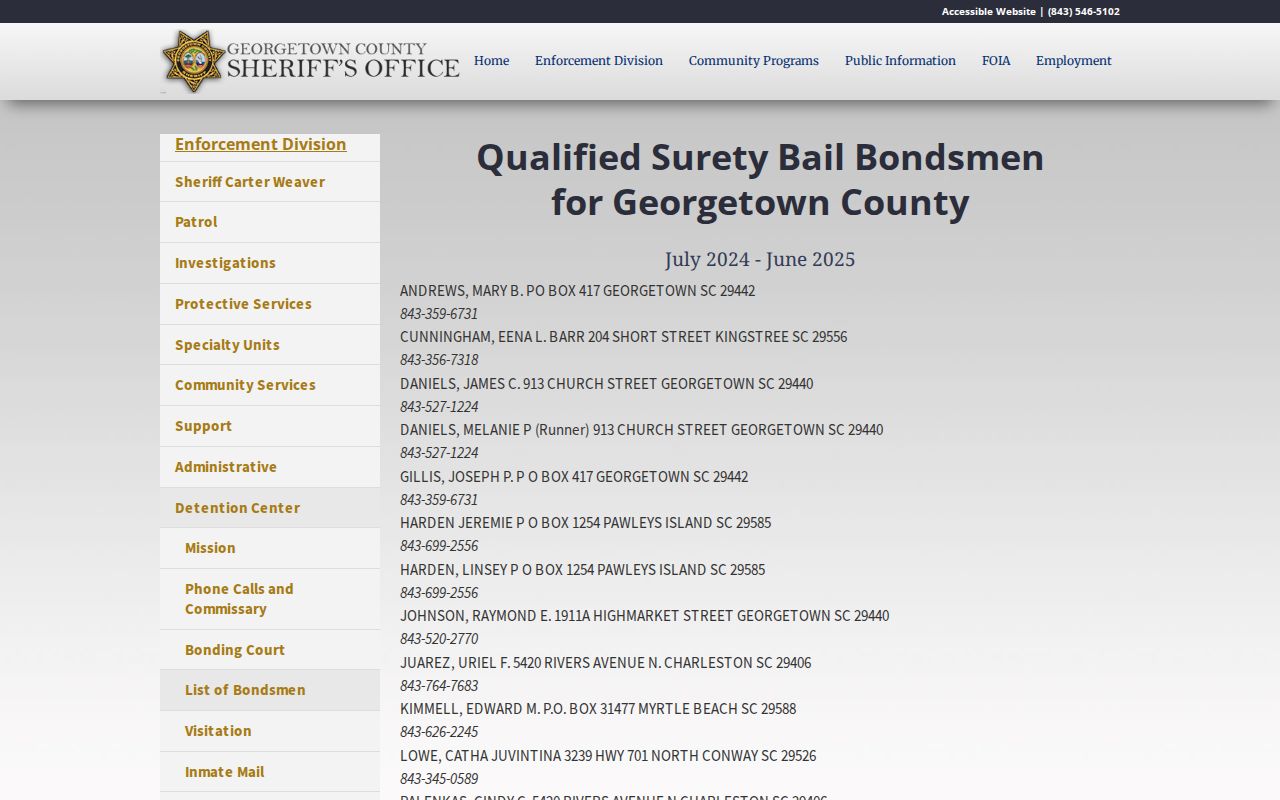
Use that official list for current details. Verify the bond amount and acceptance rules with the court or detention center. Note: Georgetown County publishes no uniform bond schedule, no warrant-confirmation fee, and no universal jail payment method.
Georgetown County Warrant Court Exceptions
Municipal and Family Court cases show why one Sheriff interface cannot answer every Georgetown County warrant question. The Clerk’s counter holds circuit and family files. A municipal or magistrate court runs its own missed-date process. The Sheriff may serve papers without holding the court’s full file. Child support has its own split. The Clerk’s FAQ says a purge payment ordered after a Family Court appearance or bench warrant goes to the Clerk, while ordinary support payments go to the State Disbursement Unit. Ask which type the court ordered before sending money. Georgetown County readers should start with the court named on the notice, then call the Warrants Unit if county service is involved.